Posts Tagged laity
Nor more audible gasps in church, please / National Catholic Reporter
Posted by Voice of the Faithful in Future of the Church, Voice of the Faithful on May 24, 2017
“One cannot be ‘responsible’ for the ‘Church’s being and action,’ for example, if ignorant of basic facts about what’s going well or poorly … Who knows why such information was not shared more widely within that archdiocese over the decades … No matter how well-meaning the motive, the lack of transparency with basic information smacks of what church leaders like the late Cardinal Francis George and Pope Francis have called an unhealthy ‘clericalism.'”
Recent events in the Hartford Archdiocese underscore our church’s profound challenges, yet also point the way to toward a better future. Archbishop Leonard Blair recently announced a sweeping and painful reorganization: consolidating 212 churches down into 126 …
“As part of that process, one parish’s congregants were briefed about the broader context. Since 1969, the number of Catholics in the archdiocese had declined by 69 percent; the number of priests had fallen by roughly two-thirds.
One parishioner told National Catholic Reporter that such statistics were greeted by an audible gasp in the church. ‘It’s an unbelievable attrition,’ the parishioner said, ‘It was a real shock.’ Her ‘shock’ points to a first step on the long path to a revitalized Catholic Church …
Consider that “audible gasp” as an indictment of sorts and a cry to do things differently from now on: parishioners should never be in a position to be shocked by news about the ongoing health of their own parishes and diocese.” (emphasis added)
By Chris Lowney, National Catholic Reporter — Read more …
Catholic bishops rule in their dioceses; who gets a say in their appointment?
Posted by Voice of the Faithful in Catholic Bishops, Voice of the Faithful on January 10, 2017
 Jan. 10, 2017 – Four U.S. Catholic bishops have reached retirement age and five more will in 2017, and their dioceses await word about who their next bishop will be. The stakes are high. Bishops rule in their dioceses.
Voice of the Faithful has long advocated for the widest possible input in selecting local bishops. Catholic lay people have the right and responsibility to comment and an expectation of being heard on issues important to the church. Not much is more important than who leads the local diocese. But papal nuncios (ambassadors), who recommend bishop candidates to the pope, listen only to a few influential clerics and even fewer lay people.
Pope Francis has made clear his desire for casting the widest possible net for bishop candidates. Most recently, the pontiff told his nuncios, “You cannot be content to fish in aquaria, in the reserve or in the breeding grounds of ‘friends of friends,’” he said.
To help ensure the laity is heard, VOTF provides a website, votf.org/bishop, where lay people can become involved in the process. They can easily express their concerns and recommendations in three areas: 1.) outstanding needs and opportunities in the diocese; 2.) candidates’ ideal qualities and qualifications; and 3.) priests who would be excellent candidates for their bishop.
More than 500 Catholics in nearly a dozen dioceses from New England to Alaska have submitted their comments on the website. Recommendations made on the website go directly to Archbishop Christophe Pierre, the present U.S. apostolic nuncio.
U.S. bishops who already have submitted letters of resignation to the Pope, required at age 75, are:
- Archbishop Donald Wuerl of Washington, D.C.;
- Bishop Gerald Kicanas of Tucson, Arizona;
- Bishop Martin Amos of Davenport, Iowa; and
- Bishop Stephen Blaire of Stockton, California.
U.S. bishops who turn 75 this year are:
- Bishop Francis DiLorenzo of Richmond, Virginia;
- Bishop Ronald Herzog of Alexandria, Louisiana;
- Bishop Alvaro Corrada Del Rio, S.J., of Mayagüez, Puerto Rico;
- Bishop Joseph Pepe of Las Vegas, Nevada; and
- Bishop Robert Meunch of Baton Rouge, Louisiana.
Several dioceses, where the Pope has accepted the bishops’ resignations, await replacements. They are:
- Allentown, Pennsylvania, former bishop John Barres now bishop of Rockville Centre, New York;
- Cheyenne, Wyoming, former bishop Paul Etienne now archbishop of Anchorage, Alaska;
- Cleveland, Ohio, former bishop Richard Lennon resigned for health reasons;
- Indianapolis, Indiana, former archbishop Joseph Tobin now archbishop of Newark, New Jersey
- Juneau, Alaska, former bishop Edward Burns now bishop of Dallas, Texan;
- Pensacola-Tallahassee, Florida, former bishop Gregory Parkes now bishop of St. Petersburg, Florida;
- Raleigh, North Carolina, former bishop Michael Burbidge now bishop of Alexandria, Virginia.
Catholics in any of these dioceses can use votf.org/bishop to send their input about their next bishop to the U.S. apostolic nuncio.
Voice of the Faithful News Release, Jan. 10, 2017
Voice of the Faithful®: Voice of the Faithful® is a worldwide movement of faithful Roman Catholics working to support survivors of clergy sexual abuse, support priests of integrity and increase the laity’s role in the governance and guidance of the Church. More information is at www.votf.org.
Contact: Nick Ingala, nickingala@votf.org, (781) 559-3360
Our Faithful Revolution
Posted by Voice of the Faithful in church reform, Future of the Church, Voice of the Faithful on January 5, 2017
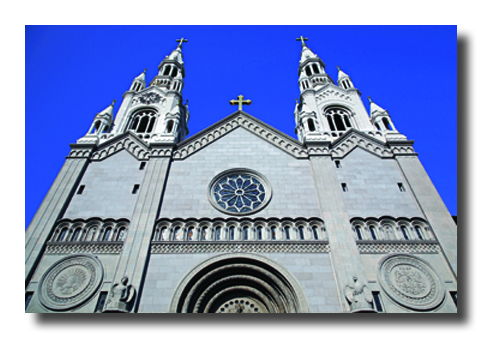 In this first week of a new year, Voice of the Faithful reflects.
Voice of the Faithful, a community of Roman Catholics committed to service and reform, has always sought to “Keep the Faith, Change the Church.” We are faithful Catholics seeking to change those Church structures and processes that impede lay voices and change Church cultures that exhibit a clericalism that separates the clerical from the lay rather than binding them pastorally and collegially.
Such clericalism often stifles the people of God. Pope Francis has said as much and condemned clericalism repeatedly, recently saying that “the spirit of clericalism is an evil that is present in the Church today, and the victim of this spirit is the people, who feel discarded and abused.”
The story of Voice of the Faithful’s founding is well documented. The movement exploded onto the scene in 2002 along with the burgeoning visibility of Church scandal, specifically clergy sexual abuse of children in the Archdiocese of Boston, chronicled most effectively by The Boston Globe in 2002 and 2003.
The movement spawned a frenzy of activity at the beginning, fueled by anger at and frustration with a Church that had, euphemistically, let us down. If you were to review the Globe stories, other media coverage of the crisis from that era, and books about Voice of the Faithful written since, you would discover that Voice of the Faithful could be credited with much of the rhetoric calling the Church to task.
By 2017 Voice of the Faithful, with commitment and tenacity, has settled into a long struggle in which we use our voices to help change Church structure and culture so that scandal has no fertile ground in which to grow. Progress has been slow, but steady.
We offer Catholics a community within the community of the Church where, as the people of God, we find a way to remain faithfully Catholic without giving up our baptismal right and responsibility to offer opinions and foster dialogue on issues important to the Church.
This is a post-Vatican II point of view well expressed recently by Fr. Louis Cameli, author of more than a dozen books and the Chicago archbishop’s Delegate for Formation and Mission. In an interview about post-Vatican II pontiffs in National Catholic Reporter Cameli said he “sees underlying, foundational points of continuity in the post-conciliar era.” Two of the points he made are especially pertinent to Voice of the Faithful:
- “Communion: The Church is a set of interlocking and dynamic relationships among people and with the Triune God (in contrast to a primarily organizational-institutional-structural model of the Church).
- “Dialogue: The Church is the place where believers speak and listen to each other, and it is the community of faith that speaks with and listens to the world. (This is the ecclesia discens et docens (Church teaching and learning) and, therefore, is a dynamic community instead of a static “container of truth.”)”
Communion and dialogue could be Voice of the Faithful watchwords. We are a community concerned with providing a voice for the voiceless and have introduced the language of clericalism, accountability, and transparency into the language of Church reform, language that is being reiterated by no less than the present occupant of St. Peter’s chair. While we have always supported victims/survivors and promoted programs that better protect children, we have focused most directly on finding, naming, and publicizing the underlying causes of scandal which must be addressed to stop and prevent scandal.
Kathleen McPhillips, a lecturer at the University of Newcastle, has succinctly framed the challenge Voice of the Faithful seeks to meet. In an article in the Newcastle Herald called “The royal commission has exposed a Catholic Church in desperate need of change,” she said:
“It is imperative [that] current religious groups undertake research into why this happened, as well as resourcing for the healing of survivors … Understanding how this happened is essential to the health of our community, and to the creation of new Church structures which are transparent, inclusive, accountable and respectful of women and children. The Church needs to show it is serious about cultural change – this is yet to be effectively demonstrated.”
More information about Voice of the Faithful is at www.votf.org.
Canadian Bishops Write Letter Affirming Importance of Laity / Zenit: The World Seen from Rome
Posted by Voice of the Faithful in Voice of the Faithful on September 23, 2016
Echo criticism of clericalism often made by Pope Francis
The Episcopal Commission for Doctrine of the Canadian Conference of Catholic Bishops (CCCB) has released a new document entitled The Co-responsibility of the lay Faithful in the Church and the World.
“This pastoral letter explores the great responsibility of the laity in God’s plan for the world, in which they are not simply collaborators of the clergy but are truly “co-responsible” for the Church’s being and acting …”
- Click here to see this story on Zenit.org.
- Printed copies of the document are on sale from CCCB Publications (or by emailing publi@cccb.ca).
- Click here for a PDF of the CCCB’s The Co-responsibility of the Lay Faithful in the Church and the World.
- Click here to see Voice of the Faithful’s document Responsibilities & Rights of the Laity.
Francis: Spirit works in laypeople, ‘is not property of the hierarchy’ / National Catholic Reporter
Posted by Voice of the Faithful in Clericalism, Pope Francis, Vatican, Voice of the Faithful on April 26, 2016
Pope Francis has again sharply denounced the culture of clericalism among priests in the Catholic church, calling it ‘one of the greatest deformations’ that must be confronted by the global faith community and saying it helps ‘diminish and undervalue’ the contributions that laypeople make.
“The pontiff has also strongly reaffirmed the right of laypeople to make decisions in their lives, saying that priests must trust that the Holy Spirit is working in them and that the Spirit ‘is not only the ‘property’ of the ecclesial hierarchy.’
“In a letter to Cardinal Marc Ouellet in his role as the head of the Pontifical Commission for Latin America, released by the Vatican Tuesday (Apr. 25), Francis says he wants to speak to the members of the commission about how to better serve what he terms ‘the Holy Faithful People of God.’
“‘Evoking the Holy Faithful People of God is to evoke that horizon which we are invited to look at and reflect upon,’ states the pope. ‘It is the Holy Faithful People of God that as pastors we are continually invited to look to, to protect, to accompany, to sustain and to serve.'”
By Joshua J. McElwee, National Catholic Reporter — Click here to read the rest of this story.
Voice of the Faithful wonders whether any clergy are listening to the Pope.
Pope Francis’ Apostolic Exhortation on family stresses grace over dogma / Voice of the Faithful Statement
Posted by Voice of the Faithful in church reform, Future of the Church, Pope Francis, Vatican, Voice of the Faithful on April 8, 2016
BOSTON, Mass., Apr. 8, 2016 – Pope Francis delivered his Apostolic Exhortation, Amoris Laetitia, on the Bishops’ Synod on the Family today in Rome. Church reform movement Voice of the Faithful welcomes his efforts to temper dogma with grace in order to respond to 21st century lay voices.
Pundits immediately began to parse every word of Francis’ 256-page letter (click here to read Amoris Laetitia) and will continue to do so for some time, but Francis, while calling for pastoral change, is leaving the implementation of his letter to bishops. VOTF urges lay Catholics to make sure their voices are heard as the Pope’s exhortation is implemented.
We remind lay Catholic of two themes expressed by Vatican II and reiterated in Francis’ letter: the place of the teaching authority of the Church (magisterium) and the place of individual conscience in deciding how to act.
Regarding the magisterium, Francis says in his letter, “… I would make it clear that not all discussions of doctrinal, moral or pastoral issues need to be settled by interventions of the magisterium. Unity of teaching and practice is certainly necessary in the Church, but this does not preclude various ways of interpreting some aspects of that teaching or drawing certain consequences from it.”
In addition, Vatican II defined the teaching authority of the Church as including all the faithful People of God, lay and cleric alike. Lay voices matter. In his Commonwealmagazine article on Francis’ exhortation, Vatican pundit Massimo Faggioli says, “… the direction of this pontificate is toward a non-ideological magisterium, a more inclusive Church, a Church of mercy.”
Regarding conscience, the Pope says in his letter: “We also find it hard to make room for the consciences of the faithful, who very often respond as best they can to the Gospel amid their limitations, and are capable of carrying out their own discernment in complex situations. We have been called to form consciences, not to replace them.” And as Francis says elsewhere in his letter, “A pastor cannot feel that it is enough simply to apply moral laws to those living in ‘irregular’ situations, as if they were stones to throw at people’s lives.”
As an organization whose mission calls for the Faithful “to actively participate in the governance and guidance of the Church,” VOTF welcomes this affirmation of our efforts and encourages lay Catholics to raise their voices.
More on the responsibilities and rights of the laity is available at votf.org by using the Lay Education button under Programs.
Voice of the Faithful®: Voice of the Faithful® is a worldwide movement of faithful Roman Catholics working to support survivors of clergy sexual abuse, support priests of integrity and increase the laity’s role in the governance and guidance of the Church. More information is at www.votf.org.
Contact: Nick Ingala, nickingala@votf.org(link sends e-mail), (781) 559-3360
Francis’ priorities vs. the priorities of the U.S. bishops / National Catholic Reporter
Posted by Voice of the Faithful in Catholic Bishops, Future of the Church, Pope Francis, Vatican, Voice of the Faithful on November 16, 2015
As the U.S. bishops gather in Baltimore for their annual fall meeting this week (Nov. 16-17), they will be deciding their priorities until the end of this decade. Will these priorities sync with those of Pope Francis or will the bishops continue on as if the pope is not taking the church in a new direction …
“Francis has been very clear in laying out his priorities in his talks and writings. His priorities would look more like this:
- A poor church for the poor
- The church as a field hospital, a church of mercy and compassion
- The practice of synodality at all levels of the church
- The end of clericalism and the empowerment of the laity
- The promotion of justice and peace and the protection of the environment —
“Francis’ harshest words are against clericalism and careerism in the church. He sounds like Jesus denouncing the scribes and Pharisees. He insists that leadership is for service. That shepherds must smell like their sheep. And that priests and bishops are at the bottom of the pyramid, not the top …
“Francis also wants to empower the laity to take up their role in evangelization and in reshaping the world according to Gospel values.
“As he asked the CELAM bishops in Brazil,
- ‘Do we make the lay faithful sharers in the mission?’
- Do diocesan and parish councils, ‘whether pastoral or financial, provide real opportunities for laypeople to participate in pastoral consultation, organization and planning?’
- Do we give the laity ‘the freedom to continue discerning, in a way befitting their growth as disciples, the mission which the Lord has entrusted to them? Do we support them and accompany them, overcoming the temptation to manipulate them or infantilize them?'”
By Thomas Reese, National Catholic Reporter — Click here to read the rest of the article.
Pope Francis creates Vatican office combining laity, family, life issues / Catholic News Agency
Posted by Voice of the Faithful in church reform, Future of the Church, Pope Francis, Vatican, Voice of the Faithful on October 23, 2015
Pope Francis announced Thursday (Oct. 22) to the Synod on the Family that he has chosen to establish a new office in the Roman Curia that will deal with issues of laity, family, and life, as part of his reform of the curia. ‘I have decided to establish a new Dicastery with competency for Laity, Family and Life, that will replace the Pontifical Council for the Laity and the Pontifical Council for the Family,’ Pope Francis said Oct. 22, according to a communique from the Holy See press office.”
By Catholic News Agency — Click here to read the rest of this story.
Voice of the Faithful
 A lay movement for governance reform in the Roman Catholic Church, responding to the clergy sexual abuse scandal and supporting survivors.
 Voice of the Faithful
- An error has occurred; the feed is probably down. Try again later.
 Voice of the Faithful ®